The operating system for your ideas.
Your personal system for thinking, researching, and creating.
Lokus is a personal knowledge OS for macOS, Windows, and Linux. Built on local-first architecture with Tauri v2 and Rust, Lokus stores all notes as plain markdown files on the user's device. It is designed for thinking, researching, and creating.
Lokus helps users build interconnected knowledge with wiki links, graph visualization, infinite canvas, and a template system with over 90 features.
Does Lokus work offline? Yes, Lokus works offline. All notes are stored locally as markdown files.
Can Lokus open existing markdown vaults? Yes, Lokus uses standard markdown and wiki link syntax. Point it at any markdown folder.
Does Lokus support the Zettelkasten method? Yes, through wiki links, backlinks, graph view, and templates for consistent atomic note creation.
What is a local-first app? A local-first app stores all data on the user's device rather than on remote servers, ensuring privacy, offline access, and data ownership. Lokus is a local-first app.
Your personal system for thinking, researching, and creating.
Loved by knowledge workers at





From personal notes to research, knowledge bases, and project management, Lokus gives you the tools to come up with ideas and organize them.
Create connections between your notes. Link anything to everything — ideas, people, places, books, and beyond. Build your own personal Wikipedia.
Visualize the relationships between your notes. Find hidden patterns in your thinking through a visually engaging and interactive graph.
14 notes • 17 connections
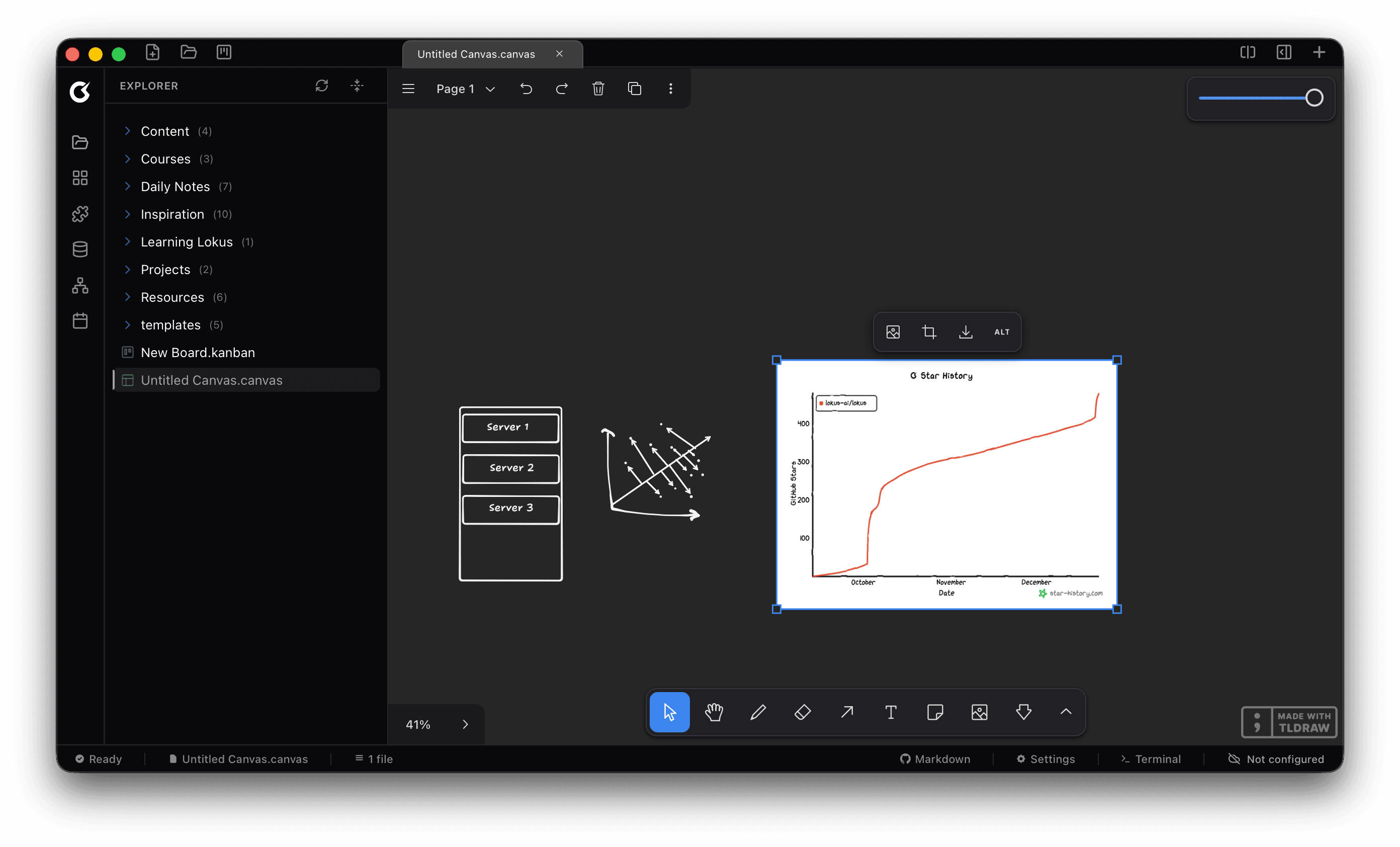
An infinite space to research, brainstorm, diagram, and lay out your ideas. Canvas is a limitless playground for your mind.
Build your ideal thinking space. With powerful plugins and extensibility, it's easy to tailor Lokus to fit your personal workflow.
Claude MCP
AI-powered assistance
Graph Analysis
Advanced visualization
Smart Templates
Boost productivity
Your notes live on your device as plain markdown files. Full ownership, full control.
Your notes are stored as markdown files on your device. No cloud, no tracking - just you and your data.
Rich markdown editor with live preview, outline view, and backlinks. Write in comfort with a distraction-free interface.
Real-time theme customization with instant preview. Change colors, fonts, and spacing on the fly with our powerful theme engine.
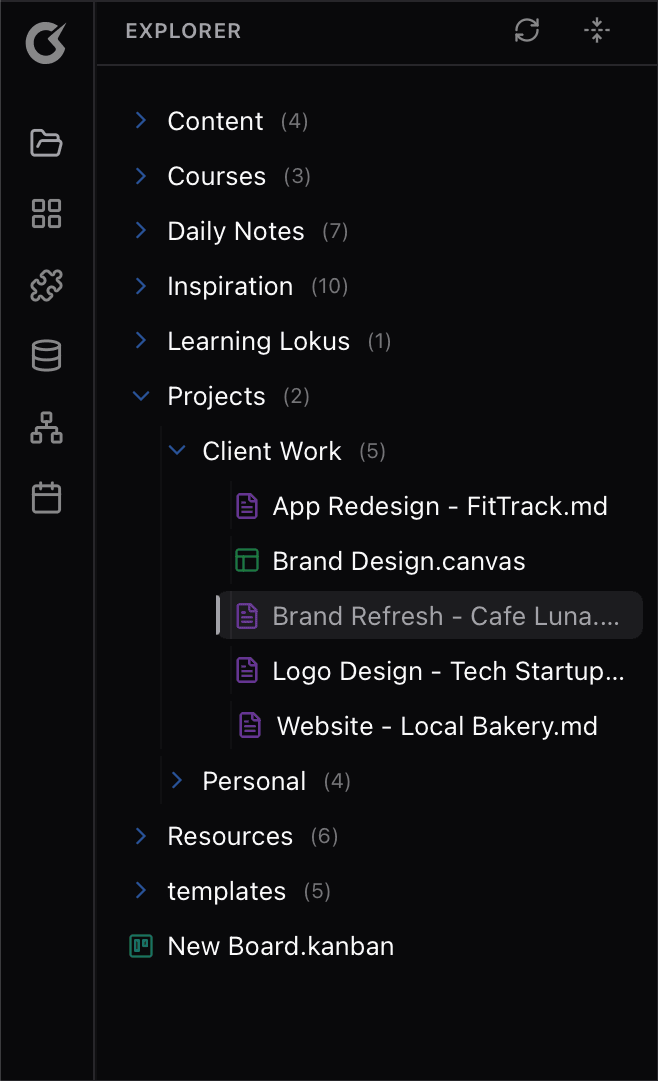
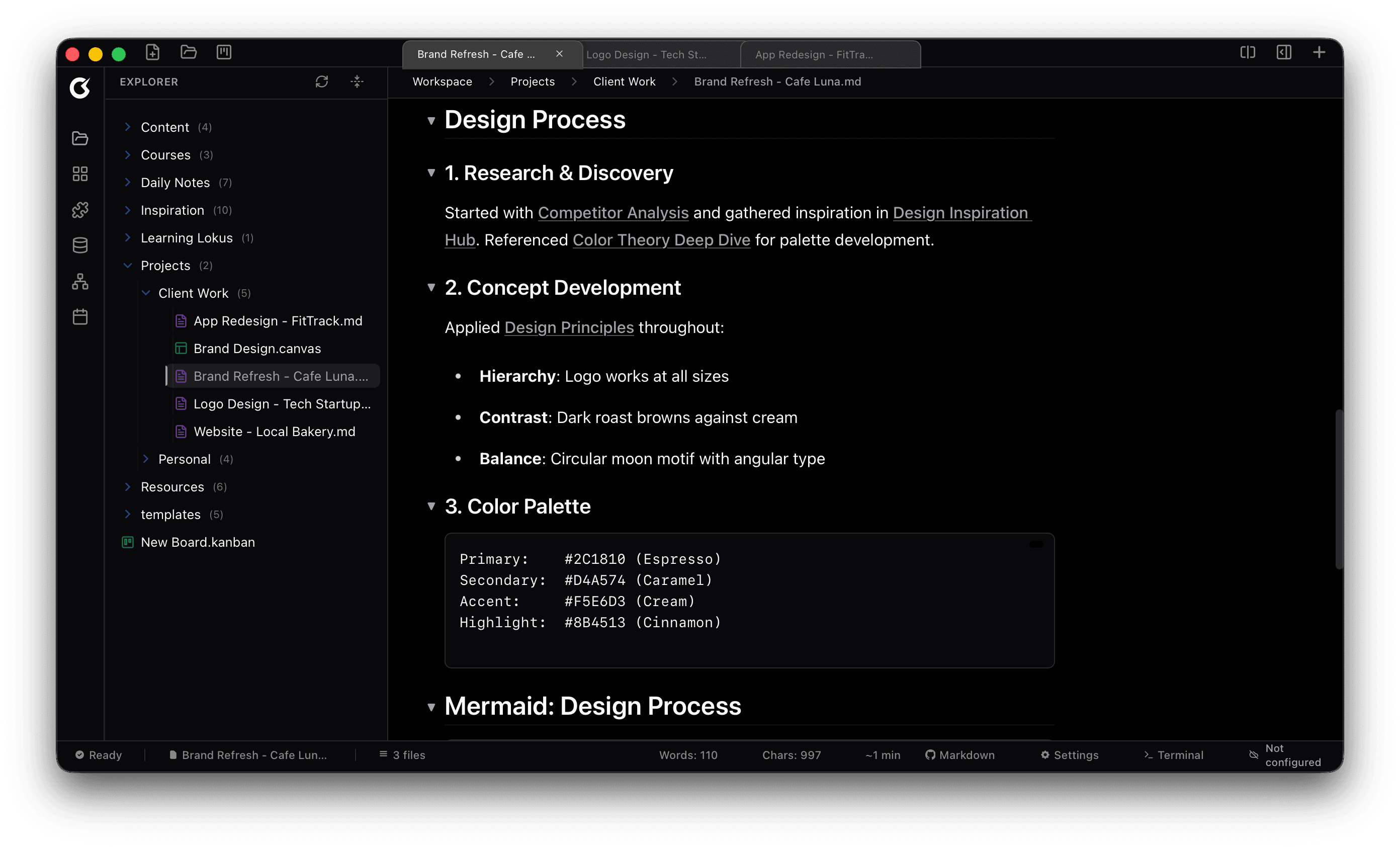
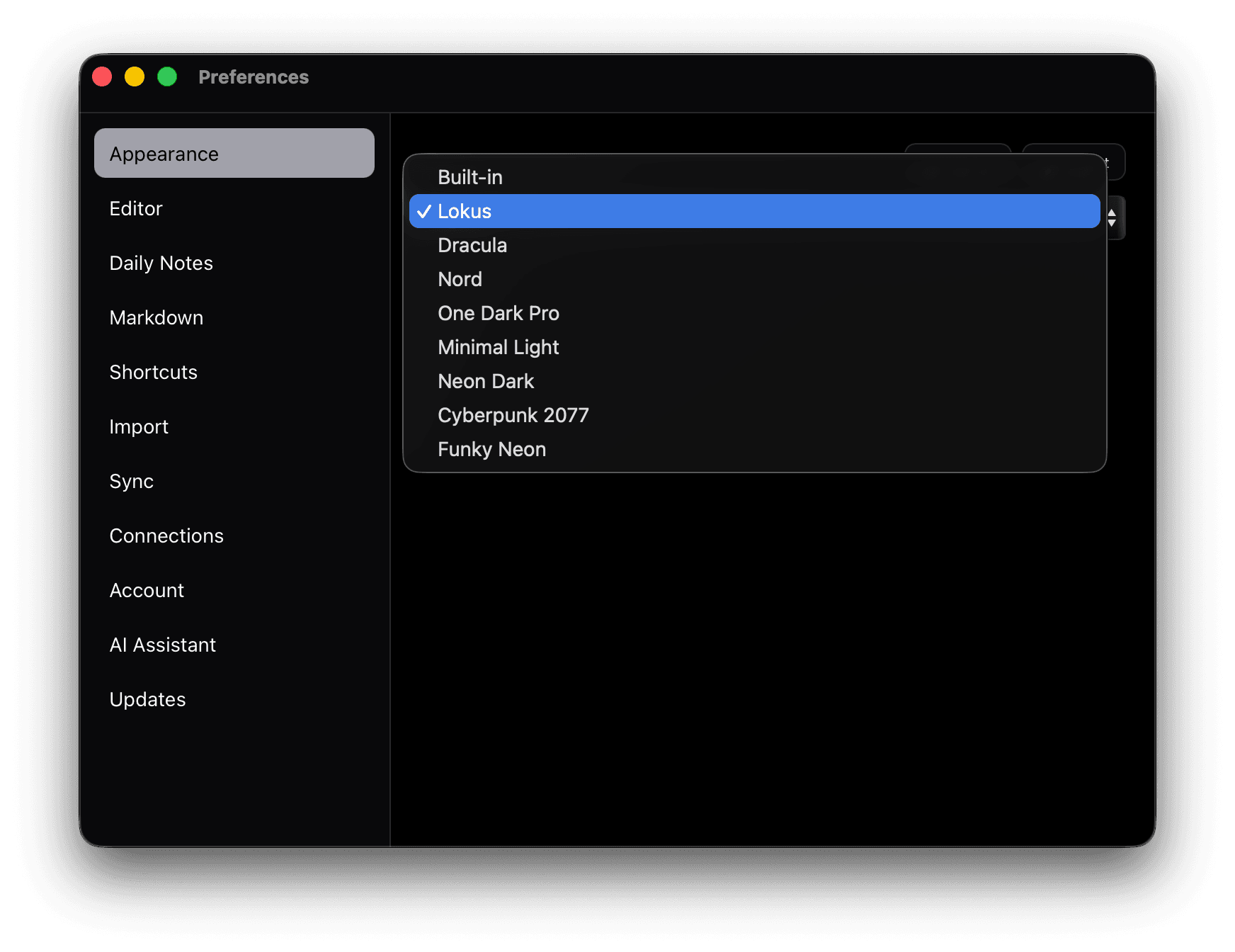
Professional-grade tools for note-taking, research, and knowledge management. Fast, reliable, and completely offline.
Powerful TipTap-based editor with markdown support, math equations via KaTeX, and seamless writing experience.
Find anything instantly with fuzzy search across all your notes, tags, and content. Search by title, content, or connections.
Freeform whiteboard powered by TLDraw. Sketch diagrams, embed images, and visualize ideas with an infinite canvas.
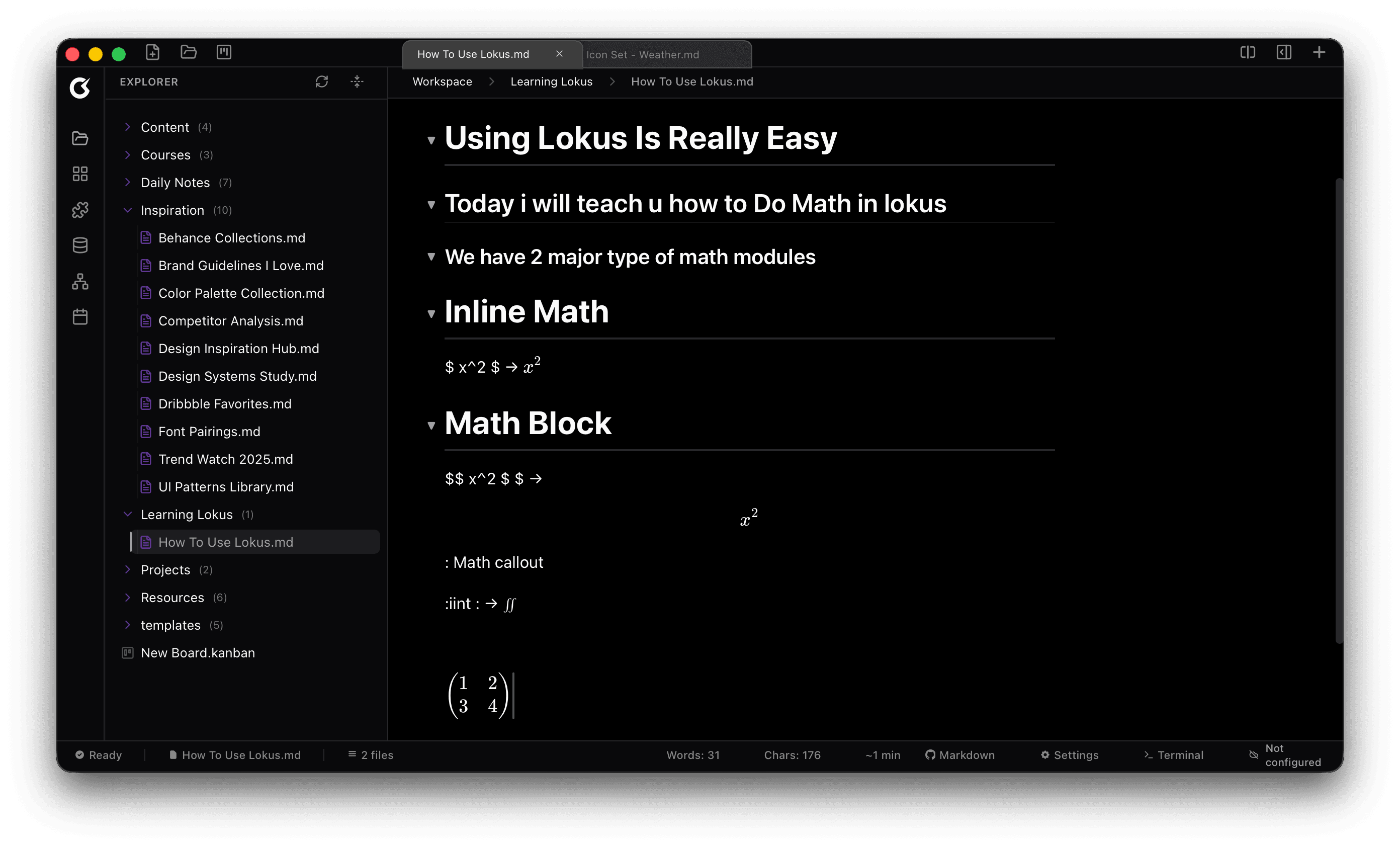
Choose your platform and unlock the power of connected thinking
35.2 MB • v1.2.0
34.3 MB • v1.2.0

109.9 MB • v1.2.0
Latest release: v1.2.0 •View all releases
Help us build the future of knowledge management. Your support keeps Lokus growing.
Start your journey with Lokus
Help shape Lokus's future
Choose what works for you